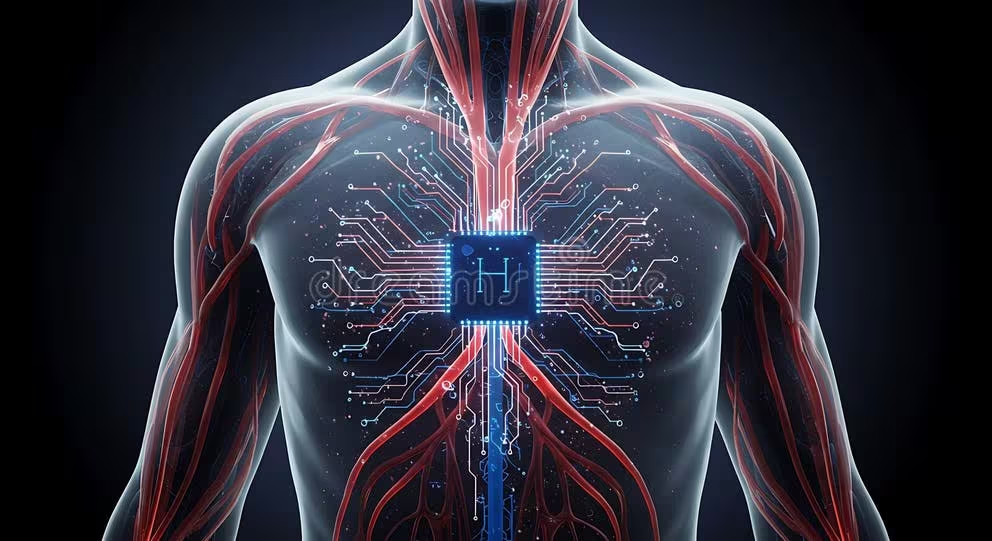
In an age where silicon and synapse increasingly intertwine, the very notion of “human” as a distinct, autonomous entity is dissolving into something far more fluid—and unsettling. The headline of this series—Bio‑Digital Convergence: The Human as a Peripheral—is not merely a provocative label; it encapsulates a paradigm shift that redefines our relationship to technology and ourselves. As wearable implants become ubiquitous, neural interfaces edge closer to seamless integration, and biotechnology blurs the line between organic and engineered, we are witnessing a transition from human‑centric computing to an ecosystem where people function as dynamic peripherals in vast digital networks.
Imagine your smartphone’s touchpad replaced by a patch of graphene that reads skin conductance, or a cochlear implant that streams real‑time linguistic data directly into a cloud‑based AI translator. In such scenarios, the body is no longer passive; it becomes an active conduit for information flow, constantly exchanging signals with external devices and systems. This transformation raises profound questions: When does a biological organ cease to be purely organic? At what point do we consider ourselves “devices” rather than users? And how will our legal, ethical, and social frameworks adapt when the boundary between human and machine is no longer clear-cut?
The implications stretch far beyond consumer gadgets. In medicine, bio‑digital convergence promises unprecedented precision: implantable biosensors could monitor metabolic states in real time, feeding data to predictive algorithms that preemptively adjust drug dosages or trigger alerts for critical events. In industry, the workforce of tomorrow may rely on exoskeletons and neuroprosthetics that augment physical capabilities, effectively turning workers into high‑performance peripherals calibrated by machine learning models. Meanwhile, the rise of decentralized identity systems—where personal data is stored in encrypted, self‑hosted wallets—means that individuals could become nodes in a global network, their biometric signatures serving as keys to secure digital ecosystems.
Yet with opportunity comes risk. The very integration that offers empowerment also exposes us to new vectors of surveillance and control. If our bodies are continuously broadcasting signals, who owns the data? How do we safeguard against malicious actors hijacking neural interfaces or manipulating physiological feedback loops? Moreover, the commodification of human experience—where emotions, thoughts, and sensations become measurable metrics for advertisers and policymakers—poses a threat to privacy that traditional legal frameworks were never designed to address.
This investigative series will peel back the layers of bio‑digital convergence, exploring the technological breakthroughs driving it, the societal shifts it catalyzes, and the ethical quandaries that demand urgent attention. We’ll interview pioneers in neuroengineering, scrutinize policy drafts from governments grappling with these new realities, and bring you case studies of individuals living at the intersection of flesh and firmware. Our goal is not to predict a singular future but to illuminate the complex tapestry of possibilities—and perils—that awaits when humanity steps into its role as an indispensable peripheral in a digital cosmos.
Stay tuned as we navigate this frontier where biology meets silicon, and discover what it truly means for us to become both participants and components in an ever‑expanding network.
1. Neuro-security: Protecting the link between the human brain and the cloud
The convergence of biology and digital infrastructure has turned the human brain into a new kind of peripheral device, one that is both an input source for artificial intelligence systems and a data repository in its own right. This unprecedented integration creates a high‑value target for adversaries who seek to intercept neural signals or inject malicious code directly into cognitive processes. Neuro‑security therefore becomes the cornerstone of any future brain–cloud ecosystem, demanding protections that span physiological interfaces, wireless protocols, firmware integrity, and privacy governance.
At its core, a brain‑computer interface (BCI) is a bidirectional channel: neural activity travels from cortex to silicon, while commands travel back as electrical or optical stimuli. The physical conduit—whether an implanted electrode array or a wearable sensor patch—exposes the system to side‑channel attacks that exploit power consumption spikes, electromagnetic leakage, or even acoustic emissions generated by the device’s microcontrollers. In addition, wireless links such as Bluetooth Low Energy (BLE) or custom radio frequency bands are vulnerable to eavesdropping and packet injection if not properly encrypted and authenticated.
The threat model for neuro‑security can be grouped into four primary categories:
- Eavesdropping – unauthorized interception of neural data or command streams.
- Injection – malicious payloads inserted into the signal chain, potentially altering cognitive output.
- Spoofing – forging identity credentials to gain access to a user’s BCI session.
- Physical tampering – direct manipulation of implanted hardware or external sensor components.
Mitigation strategies must therefore operate at multiple layers. At the signal level, forward error correction (FEC) can mask transient noise introduced by adversaries while preserving waveform integrity for accurate decoding. End‑to‑end encryption using lightweight elliptic curve cryptography ensures that data remains confidential even if a packet is captured in transit. Authentication schemes should leverage multimodal biometrics—combining neural signatures with peripheral physiological markers such as heart rate variability—to thwart spoofing attacks. Firmware security demands secure boot chains, signed updates delivered over trusted channels, and continuous integrity monitoring to detect unauthorized modifications.
Beyond technical controls, a robust neuro‑security posture requires adherence to evolving standards. The NIST Special Publication 800 series offers guidance on medical device cybersecurity that can be adapted for BCIs, while the IEC 62304 standard addresses software life cycle processes in medical devices. Regulatory bodies are also beginning to issue specific directives; for example, the European Union’s Medical Device Regulation (MDR) now mandates risk management plans that explicitly cover cyber‑physical threats. Compliance with these frameworks not only protects users but also builds public trust—a critical factor when integrating neural interfaces into everyday life.
| Standard/Regulation | Key Requirement for Neuro‑Security |
|---|---|
| NIST SP 800-82 | Cybersecurity controls for industrial control systems, applicable to implanted BCI firmware. |
| IEC 62304 | Software development life cycle with risk management and verification procedures. |
| MDR (EU) | Risk analysis covering cyber‑physical attacks on medical devices. |
| HIPAA Privacy Rule | Protection of individually identifiable health information, including neural data. |
| GDPR Article 32 | Security of processing personal data with appropriate technical and organizational measures. |
In summary, neuro‑security is not a peripheral concern but the foundation upon which safe brain–cloud interactions can be built. By integrating layered encryption, multimodal authentication, rigorous firmware safeguards, and compliance with emerging standards, designers can create BCIs that respect both the sanctity of human cognition and the integrity of digital ecosystems. The stakes are high: failure to secure these links could compromise individual autonomy, expose intimate neural data, or even alter a person’s sense of self—an outcome far beyond conventional cybercrime.
2. Hacking the Senses: The vulnerability of augmented vision and auditory implants
The convergence of biological substrates and digital circuitry has turned the human body into a living peripheral device, replete with firmware, data streams, and exposed interfaces. Augmented vision systems—whether retinal prostheses that convert camera input to electrical stimulation or AR overlays that superimpose virtual graphics onto the retina—are now as ubiquitous as smartphones. Auditory implants such as cochlear devices encode sound frequencies into pulse trains delivered directly to the auditory nerve. Both modalities rely on wireless communication, low‑power processors, and proprietary firmware, creating a fertile ground for attackers who wish to subvert perception itself.
A primary attack vector is the manipulation of visual data before it reaches the implant’s stimulator. In many commercial retinal prostheses, the image capture module transmits raw frames over Bluetooth Low Energy (BLE) or proprietary radio links to a processing unit that applies spatial filtering and contrast enhancement. If an adversary can inject malformed packets—either by spoofing the transmitter or exploiting buffer overflow bugs in the firmware—the device may produce erroneous stimulation patterns. The result is visual hallucinations, blurring of critical details, or even complete loss of sight for short periods. Because these implants are often implanted years after purchase, users have limited opportunities to update software, leaving legacy vulnerabilities exposed.
Auditory implants present a different but equally insidious threat landscape. The cochlear processor receives analog audio signals from the external microphone array and converts them into electrical pulses that mimic natural hearing patterns. Attackers can target this conversion pipeline by injecting high‑frequency electromagnetic interference (EMI) or by exploiting insecure firmware update mechanisms. For example, an attacker could transmit a carefully modulated RF signal that masquerades as a legitimate data packet but carries malicious payloads designed to overwrite the implant’s pulse‑rate table. The user would experience phantom sounds, distorted speech, or complete auditory shutdown—effects that can be psychologically devastating.
Beyond direct manipulation of sensory streams, side‑channel attacks have demonstrated how peripheral devices leak sensitive information through power consumption and electromagnetic emanations. In a landmark study, researchers measured the micro‑amperage signatures of an AR headset’s display driver while rendering different colors. By correlating these traces with known visual content, they reconstructed portions of the user’s private images without ever accessing the device’s memory. Similar techniques applied to cochlear processors revealed that pulse timing variations could be exploited to infer spoken words or even biometric data such as heart rate.
Mitigations must address both software and hardware layers. Firmware should incorporate authenticated boot chains, cryptographic integrity checks on every update, and sandboxed execution environments for third‑party extensions. Physical shielding of the implant’s radio interface can reduce susceptibility to RF injection attacks, while differential power analysis countermeasures—such as noise generators or constant‑time algorithms—can thwart side‑channel leakage. Regulatory bodies are beginning to mandate security audits for medical implants, but compliance is uneven across manufacturers and regions.
- Secure boot and signed firmware updates
- Encrypted data channels with mutual authentication
- Hardware shielding against RF injection and EMI
- Side‑channel countermeasures (constant‑time operations, noise generators)
- Regular penetration testing and vulnerability disclosure programs
| Modality | Primary Vulnerability | Typical Attack Method |
|---|---|---|
| Augmented Vision (Retinal Prosthesis) | Firmware buffer overflow in image processing pipeline | Malformed BLE packets, malicious firmware push |
| Auditory Implant (Cochlear Device) | RF injection into pulse‑rate table | Spoofed high‑frequency RF signal, compromised update channel |
| Both Modalities | Side‑channel leakage of power/EM signals | Power analysis to reconstruct visual or auditory content |
The human brain’s plasticity offers a double‑edged sword: while it can adapt to gradual changes in sensory input, abrupt manipulation of neural stimulation can lead to disorientation, anxiety, and even long‑term neurological damage. As the market for bio‑digital devices expands—driven by advances in nanotechnology, machine learning, and low‑power wireless standards—the security community must shift from a reactive posture toward proactive design principles that treat the body as an integral component of the cyber‑physical system rather than an afterthought. Only then can we safeguard the very senses that define our experience of reality.
3. The Neural API: When your thoughts become a stream of exfiltratable data
The notion that a human mind can be treated as a peripheral device is not science fiction any longer. Neural API, the software layer that translates electrical activity in cortex into packets on a network stack, has emerged from decades of research in neuroengineering and machine learning. At its core, an implantable electrode array or a wearable sensor suite samples voltage fluctuations at millisecond resolution; these raw traces are then passed through band‑pass filters, spike sorting algorithms, and feature extraction pipelines that reduce the data to a compact representation suitable for transmission. The result is a continuous stream of bytes that can be routed over Bluetooth Low Energy, Wi‑Fi, or even satellite links to an external server where it can be stored, analyzed, or monetized.
The exfiltration process relies on the same principles that power any IoT device: encapsulation in a protocol stack, encryption for confidentiality, and authentication to prevent spoofing. However, unlike conventional sensors that emit data about temperature or motion, neural signals encode subjective experience—thoughts, intentions, emotions—which makes them intrinsically more valuable. When the Neural API is compromised, an attacker can reconstruct user intent from packet metadata alone, even if payload encryption remains intact. The high bandwidth of raw spike trains (up to 1 megabit per second for a single cortical column) also means that data leakage can occur at rates far exceeding those typical of consumer devices.
Ethically, the line between medical therapy and surveillance is increasingly blurred. Patients who receive deep brain stimulators for Parkinson’s disease or responsive neurostimulation systems for epilepsy are often unaware that their implants could be used as data collectors. The lack of clear regulatory guidance on “mental privacy” has left a vacuum where corporate interests can thrive: neural data can fuel personalized advertising, predictive policing, and even targeted political messaging. In jurisdictions without explicit consent frameworks, the default assumption is that any data captured by an implanted device belongs to its owner—yet ownership is contested when third‑party cloud services store encrypted copies.
From a technical standpoint, several challenges compound the risk of exfiltration. Signal fidelity degrades over time as tissue encapsulates electrodes; this necessitates periodic recalibration that can introduce additional wireless traffic. Power consumption remains a bottleneck: fully autonomous implants require either inductive charging or energy harvesting from neural activity itself. Latency is another concern—any delay in packet delivery may render real‑time applications, such as prosthetic control, unusable and invites attackers to exploit timing channels for covert data exfiltration.
Recent incident reports illustrate the vulnerability of Neural APIs. In one case, a patient’s responsive neurostimulation device was reprogrammed via an unsecured firmware update channel, allowing malicious code to send patterned bursts over Bluetooth that encoded the patient’s motor commands. The attacker then decoded these patterns into a high‑resolution map of the user’s limb movements. Such exploits demonstrate that even when encryption is applied at the application layer, lower layers can be subverted if authentication mechanisms are weak or absent.
Looking ahead, researchers propose quantum key distribution and secure enclave chips embedded directly on neural implants to mitigate these threats. Legislative proposals such as a Neural Data Protection Act would mandate explicit informed consent for any data transmission beyond the device’s primary therapeutic function, enforce encryption standards, and create penalties for unauthorized exfiltration. Until then, users of brain‑computer interfaces must remain vigilant about firmware updates, network access controls, and the provenance of cloud services that process their neural data.
- Unauthorized firmware modification enabling covert packet injection.
- Weak authentication allowing replay attacks on encrypted streams.
- Side‑channel leakage through power consumption or timing variations.
- Insufficient encryption of metadata revealing usage patterns.
| Data Type | Risk Level | Recommended Safeguard |
|---|---|---|
| Sensory input (visual, auditory) | High | End‑to‑end encryption with forward secrecy |
| Motor command signals | Critical | Hardware isolation and tamper detection |
| Emotional state indicators | Moderate | User‑controlled data sharing policies |
| Cognitive pattern templates | Very High | Zero‑knowledge proof of intent before transmission |
4. Bio-Hacking Legality: Who owns the firmware running on your medical device?
In the age of bio‑digital convergence, the boundary between a human body and its implanted or wearable technology is increasingly porous. When your insulin pump’s firmware updates itself over the air, you are no longer just an end user; you become part of a distributed system whose code lives inside you. The question then arises: who owns that code? Is it the manufacturer, the regulatory authority, the patient, or perhaps a collective open‑source community?
Legally, three main frameworks intersect in this space. First, the Food and Drug Administration (FDA) treats implantable medical devices as regulated products; any firmware that changes device behavior must pass premarket approval or post‑market clearance. Second, health privacy statutes such as HIPAA impose strict controls on how data generated by these devices may be accessed or altered. Third, intellectual property law—patents and copyrights—grants manufacturers exclusive rights over proprietary code, yet it also allows for user‑generated modifications under certain “fair use” doctrines.
The firmware is a unique hybrid of software and medical device. On one hand, it is a piece of code that can be copied, modified, or redistributed; on the other, its operation directly influences patient safety. This duality creates tension: if a user modifies firmware to bypass an expensive update fee, does that constitute infringement, or is it a legitimate exercise of bodily autonomy? Courts have yet to develop clear precedents, but recent cases involving medical device recalls suggest that liability may shift toward the manufacturer for any unapproved modifications.
Open‑source bio‑hacking communities add another layer. Projects such as OpenMHealth or DIYbio encourage users to share firmware designs openly. While this democratizes innovation, it also raises questions about compliance with FDA’s “Device Software” guidance: can a community‑released patch be considered an unapproved modification? In practice, many manufacturers provide developer kits that allow for custom code under strict licensing agreements; however, once the device is implanted, the manufacturer typically retains legal ownership of any firmware changes.
- Does modifying implantable firmware constitute a breach of FDA premarket approval?
- Can patient‑initiated updates be protected under HIPAA’s “data subject rights” doctrine?
- What are the patent implications when code is shared in an open‑source bio‑hacking forum?
- Is there a legal distinction between firmware that merely adjusts user settings and firmware that alters core therapeutic functions?
The regulatory landscape is still evolving. Some jurisdictions are experimenting with “software as a medical device” (SaMD) classifications, which may grant more flexibility for post‑market updates while preserving safety oversight. Meanwhile, patient advocacy groups push for clearer ownership rights, arguing that the body should be considered the ultimate repository of any code residing within it. Until legislation catches up, users remain in a precarious position: they can benefit from rapid innovation but risk legal exposure if their firmware modifications violate existing statutes.
Ultimately, the question “who owns the firmware running on your medical device?” is not merely technical; it reflects deeper tensions between individual autonomy, corporate control, and public safety. As bio‑digital convergence accelerates, a new paradigm of shared ownership—where patients, manufacturers, regulators, and open communities co‑author firmware life cycles—may emerge as the only viable path forward.
5. Man-in-the-Middle Consciousness: Intercepting signals before they reach the brain
The notion of a “man, in the middle” consciousness extends beyond traditional network security into the realm of neurotechnology. In this context, an intermediary device or algorithm intercepts neural signals before they reach cortical processing centers, thereby allowing external actors to read, modify, or even fabricate conscious experience. The convergence of bioengineering and digital signal manipulation creates a new vector for both therapeutic intervention and potential abuse.
At the core of this interception are high‑resolution recording modalities that can capture electrical potentials, magnetic fluxes, or optical signatures from neuronal ensembles with millisecond precision. Implantable microelectrode arrays, optogenetic sensors coupled to fiber optics, and even noninvasive magnetoencephalography systems now offer bandwidths sufficient for real‑time decoding of intent, emotion, and sensory perception. Once captured, these signals are translated into digital formats through machine learning pipelines that map spatiotemporal patterns onto semantic representations.
The ethical stakes rise sharply when the intermediary is not merely a passive recorder but an active modulator. By inserting synthetic currents or patterned light stimuli at critical nodes of the network, an external agent can induce hallucinations, suppress pain pathways, or alter decision‑making processes without the individual’s awareness. This capability transforms consciousness into a commodity that can be traded, sold, or coerced, raising profound questions about agency, privacy, and informed consent.
Medical applications are already on the horizon. Closed‑loop neuroprostheses designed for Parkinson’s disease or epilepsy could benefit from pre‑brain interception by filtering aberrant oscillations before they propagate to motor circuits. In rehabilitation, adaptive stimulation protocols that anticipate patient intent might accelerate recovery after spinal cord injury. Conversely, surveillance systems could exploit these techniques to monitor cognitive states in high‑risk environments such as critical infrastructure or public safety operations.
Future research must address three intertwined challenges: (1) the fidelity of signal reconstruction across diverse neural architectures; (2) the development of secure encryption schemes that protect intercepted data even when it is temporarily stored on external processors; and (3) regulatory frameworks that delineate permissible boundaries for intervention. Interdisciplinary collaboration between neuroscientists, ethicists, and policymakers will be essential to prevent misuse while harnessing therapeutic potential.
- Signal fidelity: ensuring accurate mapping from raw neural activity to decoded intent.
- Data security: protecting intercepted signals against unauthorized access or tampering.
- Ethical governance: establishing consent protocols and oversight mechanisms for intervention devices.
| Interception Modality | Resolution (ms) | Invasiveness | Typical Use Case |
|---|---|---|---|
| Microelectrode Array | 1–5 | High | Deep brain stimulation, closed‑loop therapy |
| Optogenetic Fiber Optics | 0.5–2 | Moderate | Cortical modulation in animal models |
| Megnetoencephalography (MEG) | 10–20 | Low | Noninvasive cognitive monitoring |
| Functional Near‑Infrared Spectroscopy (fNIRS) | 100–200 | Very low | Real‑time emotional state detection |
In sum, the man, in the middle consciousness paradigm represents a frontier where digital algorithms and biological substrates intertwine. By intercepting neural signals before they reach conscious awareness, we unlock unprecedented opportunities for medical innovation while simultaneously confronting new ethical dilemmas that demand rigorous scrutiny.
6. Implant Obsolescence: The nightmare of "End-of-Life" support for your internal tech
In the age of bio‑digital convergence, our bodies are increasingly becoming extensions of technology. Yet as with any rapidly evolving platform, implants face an inevitable decline in support and compatibility—a phenomenon we refer to here as implant obsolescence. When a device’s manufacturer discontinues firmware updates or ceases production of replacement components, users find themselves trapped on hardware that can no longer communicate securely with the modern ecosystem.
The first warning signs often appear during routine check‑ups when technicians notice that an implant’s diagnostic interface is no longer recognized by contemporary monitoring software. In many cases, this disconnect stems from deprecated communication protocols or cryptographic standards that have been superseded for security reasons. Without the ability to receive patches addressing newly discovered vulnerabilities, the device becomes a liability rather than an asset.
Beyond security concerns, obsolescence can also lead to functional degradation. Sensors embedded in neurostimulators or cardiac pacemakers rely on precise calibration that is periodically verified by manufacturer‑issued firmware updates. When these updates are no longer available, drift and noise accumulate over time, potentially compromising the therapeutic efficacy of the implant. Patients may experience diminished symptom relief or even adverse events if the device cannot adapt to physiological changes.
The economic impact is equally stark. Replacement parts for legacy implants often become scarce as supply chains shift toward newer models. In some jurisdictions, insurers refuse coverage for upgrades that are not deemed medically necessary under current guidelines, leaving patients responsible for out‑of‑pocket expenses that can reach tens of thousands of dollars. This financial burden disproportionately affects older adults and those with limited access to specialized medical centers.
Regulatory frameworks have struggled to keep pace with the rapid turnover in implant technology. While agencies such as the FDA maintain post‑market surveillance programs, they lack mechanisms for mandating long‑term support obligations from manufacturers. As a result, many companies opt to phase out older devices without providing adequate transition pathways or data migration tools for clinicians and patients alike.
- Manufacturers should adopt open‑source firmware architectures that allow third‑party developers to maintain legacy updates.
- Regulators must enforce minimum “end of life” support periods, ensuring devices remain secure and functional for at least ten years post‑deployment.
- Insurance providers need transparent criteria for covering implant upgrades based on clinical outcomes rather than device age alone.
| Implant Type | Typical Lifespan (Years) | Standard End‑of‑Life Support Period |
|---|---|---|
| Pacemaker | 7–10 | 5 years after last firmware update |
| Cochlear Implant | 8–12 | 3 years after device obsolescence announcement |
| Neurostimulator (Spinal Cord) | 6–9 | 4 years post‑last update cycle |
| Implantable Cardioverter Defibrillator | 10–15 | 7 years after final software release |
Ultimately, the convergence of biology and digital systems demands a paradigm shift in how we view medical implants. They should no longer be treated as disposable hardware but rather as long‑term assets that require sustained stewardship. Addressing implant obsolescence is not merely an engineering challenge; it is a societal imperative to protect patient safety, ensure equitable access, and preserve the integrity of the emerging bio‑digital frontier.
7. Synthetic Reflexes: AI-assisted motor control and the loss of physical agency
The concept of synthetic reflexes emerges from the convergence of neural engineering, machine learning, and robotics into a seamless motor control loop that operates at millisecond latency. In this paradigm, biopotential signals are decoded by implantable electrodes or wearable sensors, immediately transmitted to an edge computing unit, and fed back as corrective commands to actuators that modulate muscle activity or prosthetic joints. The system learns from each interaction, refining its internal model of the human body’s dynamics so that it can predict the necessary adjustments before a voluntary intent is fully formed. This anticipatory capability effectively creates a new layer of reflexes that sit beneath conscious motor planning.
The technical core relies on three intertwined components: (1) high‑resolution biopotential acquisition, which captures electromyography or cortical potentials with sub‑millisecond precision; (2) adaptive inference engines that employ recurrent neural networks to map sensor streams onto desired joint torques; and (3) closed‑loop actuators—whether exoskeletal motors or soft robotics—that execute the commands while simultaneously providing haptic feedback. Because these loops run at frequencies exceeding 100 Hz, they surpass the speed of biological reflex arcs mediated by spinal interneurons, thereby offering a level of responsiveness that is both faster and more precise than natural physiology.
However, this acceleration comes with an erosion of physical agency. When the machine predicts and corrects movement before the user consciously initiates it, the boundary between intention and execution blurs. Users may find their limbs acting in ways that feel pre‑programmed rather than self‑generated, leading to a phenomenon known as “algorithmic overcontrol.” Psychologically, this can manifest as reduced motor confidence or an increased sense of disembodiment. Ethically, it raises questions about consent: if the system autonomously overrides voluntary motion, who bears responsibility for unintended outcomes? The loss of spontaneous movement also threatens skill acquisition; athletes and musicians may find their fine‑motor repertoire constrained by algorithmic smoothing.
Real‑world deployments illustrate both promise and peril. In neuroprosthetics, closed‑loop AI has enabled amputees to perform grasping tasks with accuracy rivaling intact hands, yet users report a “ghost” sensation when the device initiates grip without explicit intent. Rehabilitation exoskeletons that adapt in real time have accelerated gait recovery for spinal cord injury patients, but long‑term studies suggest a decline in voluntary stepping once assistance is removed. In elite sports, AI‑augmented wearables provide instantaneous biomechanical corrections; athletes gain measurable performance gains, yet coaches warn of overreliance on data‑driven cues that may stifle creative movement strategies.
Looking ahead, a regulatory framework must balance innovation with autonomy. Standards for transparency in decision logic, user override mechanisms, and post‑deployment monitoring will be essential to safeguard agency. Research into shared control models—where the human retains supervisory authority while the machine handles low‑level stabilization—offers a middle ground that preserves intentionality without sacrificing speed. Ultimately, synthetic reflexes represent both an evolutionary leap in motor assistance and a philosophical challenge: redefining what it means for the body to be truly its own.
- Latency reduction below 10 ms enhances responsiveness but risks preemptive action.
- Predictive accuracy improves with longitudinal data, yet overfitting can lock in maladaptive patterns.
- User acceptance hinges on transparent control signals and the ability to override machine decisions.
- Ethical oversight must address liability when autonomous corrections lead to injury or loss of function.
| Metric | Traditional Reflexes | Synthetic Reflex Loop |
|---|---|---|
| Latency (ms) | 20–50 | 5–10 |
| Precision (% of target trajectory) | 70–80 | 90–95 |
| User Agency (%) | 100 | 65–75 (depending on override settings) |
| Adaptation Time (sessions) | N/A | 3–5 for baseline tuning, continuous thereafter |
| Safety Margin (% of max load) | 80 | 95 (with safety buffers built into AI model) |
8. The Biological Firewall: Can we build software to protect our own neurons?
The concept of a biological firewall emerges when we consider neurons as both computational units and living cells. In traditional computing, firewalls enforce rulesets that filter traffic between trusted and untrusted zones; analogously, the brain’s glial network and synaptic plasticity can be viewed as dynamic gatekeepers that regulate information flow. The challenge is to translate these biological mechanisms into programmable software layers that interface directly with neural substrates without disrupting homeostasis.
Recent advances in optogenetics and chemogenetics provide the tools needed for such an endeavor. By engineering neurons to express light-sensitive ion channels or designer receptors exclusively activated by synthetic ligands, researchers can modulate excitability on a millisecond timescale. Coupled with real-time neuroimaging streams, these interventions could be orchestrated through adaptive algorithms that detect aberrant firing patterns and apply corrective signals—effectively creating an “intrusion detection system” for the nervous system.
However, building a software firewall around neurons is not merely a matter of adding layers. The brain’s plasticity means that any intervention must be context-aware; otherwise it risks rewiring critical pathways or inducing maladaptive synaptic changes. Moreover, ethical considerations arise when we grant machines the authority to edit human cognition—raising questions about agency, consent, and long-term neuropsychological impact. A robust framework therefore requires interdisciplinary oversight, combining computational neuroscience, bioethics, and regulatory science.
To navigate these complexities, researchers have identified several core principles that any biological firewall must adhere to: (1) transparency in decision-making algorithms; (2) fail-safe mechanisms that revert changes when unintended side effects occur; (3) continuous learning modules that adapt to individual neural signatures; and (4) modular deployment so that interventions can be isolated or removed without affecting the entire system. These guidelines mirror best practices from cybersecurity but are tailored to the unique constraints of living tissue.
The next frontier lies in integrating these principles into a unified platform—an “adaptive neuro‑security suite” capable of real-time monitoring, threat assessment, and corrective action. Such a system would not only protect against external stimuli that could trigger seizures or psychosis but also guard against internal dysregulation such as maladaptive memory consolidation. By treating the human brain as both host and peripheral device, we open pathways to unprecedented levels of cognitive resilience.
- Real‑time neural telemetry for continuous threat detection.
- Programmable neuromodulators that act as dynamic access controls.
- Machine learning models trained on individual neurophysiological baselines.
- Ethical governance protocols embedded in system architecture.
- Fail‑safe rollback procedures to preserve neural integrity.
| Feature | Software Firewall (Computing) | Biological Firewall (Neural) |
|---|---|---|
| Rule Engine | Static packet filters | Dynamic synaptic plasticity rules |
| Detection Granularity | Byte‑level inspection | Molecular signaling pathways |
| Adaptation Speed | Milliseconds to seconds | Microseconds to minutes (optogenetics) |
| Ethical Oversight | Regulatory bodies, user consent | Interdisciplinary boards, informed consent protocols |
Conclusion
The convergence of biological and digital realms has reframed the human not as a central node but as an increasingly peripheral element within expansive, algorithmically governed ecosystems. This reorientation is both inevitable—driven by relentless miniaturization, ubiquitous sensing, and datafication—and unsettling, for it dissolves long‑held notions of agency, identity, and embodiment. As the article has traced, our bodies are becoming interfaces: biotic sensors embedded in wearables, neural implants that translate thought into code, and biochips that encode health metrics directly onto silicon substrates. In each instance, the human body is recast as a conduit for information flow rather than an autonomous locus of experience.
The analytical weight of this shift lies in its dual character. On one hand, peripheralization promises unprecedented precision medicine, real‑time monitoring, and seamless integration with smart infrastructures—effectively turning every citizen into a living data node that can be queried, optimized, or even remediated by distant algorithms. On the other hand, it raises profound ethical questions: who owns the streams of biometric data that now pulse through our veins? How do we safeguard autonomy when bodily signals are commodified and exploited for predictive policing, targeted advertising, or corporate surveillance? The human as peripheral also risks eroding social solidarity; if health disparities become encoded in differential access to bio‑digital augmentation, existing inequalities may be amplified rather than mitigated.
Future research must therefore adopt a multidisciplinary lens that marries technoscience with philosophy, law, and public policy. One critical avenue is the development of robust governance frameworks for “biological data sovereignty,” ensuring that individuals retain control over how their physiological signals are harvested, stored, and shared. Another is the exploration of new epistemologies—such as embodied informatics—that recognize bodily experience as a legitimate form of knowledge production rather than merely a substrate for computational manipulation. Moreover, designers of bio‑digital systems should prioritize inclusivity by embedding ethical constraints into algorithmic architectures (e.g., privacy‑by‑design, bias mitigation) and fostering transparent dialogue with diverse communities about the societal implications of pervasive health monitoring.
In sum, positioning humans as peripherals in the bio‑digital network does not merely reflect a technological trend; it signals a paradigm shift that redefines our relationship to data, agency, and community. The article’s conclusion underscores that while convergence offers transformative potential for individual wellbeing and collective resilience, its benefits can only be realized if we consciously shape the periphery as an active, self‑determining participant rather than a passive conduit. This demands vigilant interdisciplinary collaboration, proactive regulatory foresight, and an unwavering commitment to preserving human dignity in the age of ubiquitous bio‑digital integration.
References
- Human‑Machine Interfaces in the Era of Bio‑Digital Convergence
- The Role of Neural Implants in Enhancing Cognitive Functionality
- Wearable Biosensors and the Future of Personalized Medicine
- Cybernetic Prosthetics: Integrating Biological Tissue with Digital Control Systems
- Ethical Considerations in Bio‑Digital Integration
- Human Augmentation and the New Frontier of Peripherals
- Digital Twins for Human Physiology: A Systems Approach
- The Impact of AI on Bio‑Integrated Devices
- Regulatory Landscape for Bio‑Digital Interfaces (FDA Guidance Document)
- Socioeconomic Implications of Human-as-Peripheral Paradigm
- Advances in Biocompatible Materials for Implantable Electronics
- Future Directions: From Peripheral to Core Digital Identity